Training Tip: Transfer Confidence to Your Horse on the Trail, Part 1
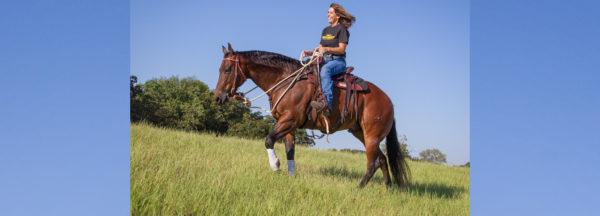
When it comes to teaching an inexperienced horse how to be confident on the trail, it should come as no surprise that the rider plays a key role. A rider’s level of confidence and ability to be a good leader directly transfer to the horse.
If the rider is confident and an active leader, the horse will relax and look to them for direction. If the rider is nervous and jumpy and doesn’t give the horse any direction, he’ll mimic the behavior and become a nervous wreck.
Riders who teach their horses to be confident and look to them for direction share three similar traits. This week we’re going to talk about knowing how to control the horse and influencing his decisions.
The Know-How to Control Their Horses
A confident rider knows that they can control any situation they get into with their horse. That sense of control comes from working with their horse on the ground and under saddle and teaching the horse to respect their cues, use the thinking side of his brain and trust them.
Keep something in mind, horses are prey animals and perceive everything around them to be dangerous. They have a flight or fight reaction, and if they feel that their life is in jeopardy, they run. Horses would always rather run from anything that frightens them instead of hanging around and fighting the danger. Mother Nature says, “Run!” If the horse can’t escape the danger, his only other option of survival is to fight. He’ll kick, bite, strike or do whatever he can to survive the situation.
When a horse uses the reactive side of his brain, he feels the need to run and move his feet. Every fiber in his body is telling him to escape the situation, even if there is no real danger. Horses always run first and think second.
You could be riding your horse out on the trail and come across a squirrel moving through the brush. Your horse can’t see the squirrel, but he can hear dried leaves and branches rustling nearby. Mother Nature says, “Run, and run fast! Don’t stop to think. Thinking is what got your uncle killed three million years ago. He didn’t think the lions were coming his way, but they were.”
Using the reactive side of his brain, your horse is imagining the worst kind of predator hiding in that brush, and he is prepared to save his life.
Your job as a horse trainer is to teach the horse to develop the thinking side of his brain. The thinking side of a horse’s brain is the calm, analytical, rational, safe and obedient side.
You get a horse to use the thinking side of his brain the exact same way you gain his respect – by moving his feet forwards, backwards, left and right and always rewarding the slightest try. The more you move the horse’s feet forwards, backwards, left and right, the more respect you get. The more respect you get, the more the horse begins to use the thinking side of his brain. It’s a double good deal.
Have a horsemanship question or looking for more training tips? Check out the No Worries Club.
